Paul Kelly Appears

“Hey guys,” said Gary, “Paul Kelly’s sitting over at the restaurant right now.” The whole table lit up with impressed Australians – “What?” “No kidding!” “Here?” But Ethan and I, as representative Americans, looked at each other quizzically. “Who’s Paul Kelly?”

Apparently Kelly’s real celebrity stuff in Australia, one of the country’s greatest singers and songwriters, known especially for some rock-ish songs in the 80s. He’s a household name down undah. Anyway, he’s here, at Mornington. Michelle, Joey and I watched the back of his head as he ate his 4-star dinner last evening, sitting next to some blonde at the restaurant. Sophie, on the hospitality staff, said she cleaned his room, er, safari tent, and reported Kelly did have a guitar. But, alas, the singer was brooding and antisocial, slipping off quietly after dinner without so much as a nod, probably psyching himself up for his concert in Broome this coming Saturday – unlike Xavier Rudd, who sang songs for us around the pizza oven when he visited a couple months ago. Celebrities are an odd bunch, especially when they show up unexpectedly in the middle of the desert…
Mistnetting

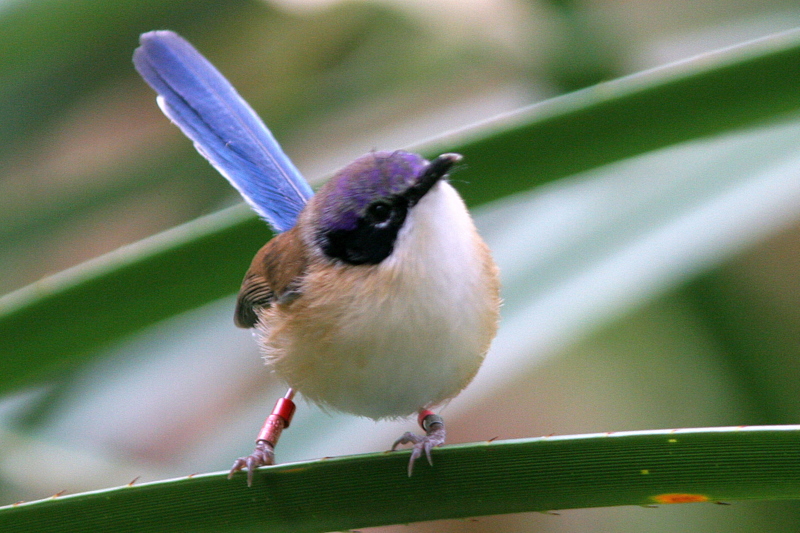
Michelle, Joey and I headed out early to catch two particular fairy-wrens which hadn’t been banded yet (meaning they are immigrants to the Annie Creek population). Basically, we try to predict where the wrens will fly, set up mist nets in those areas, wait, and hope.

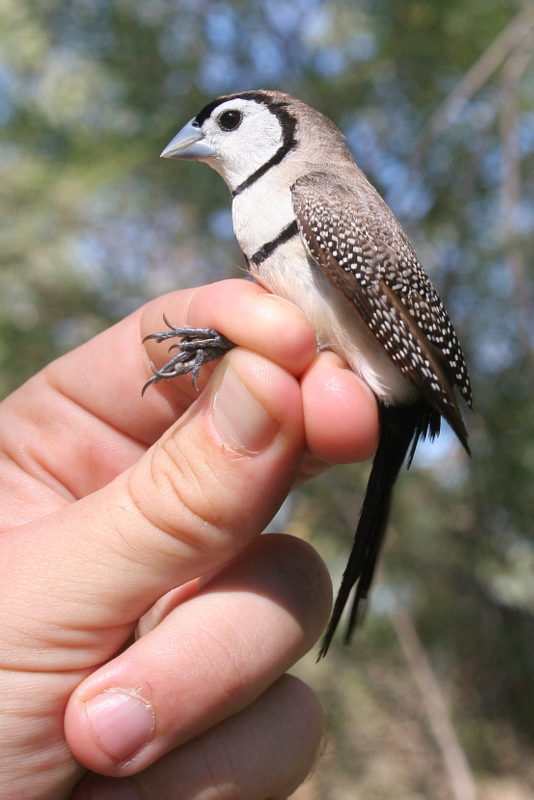
Last time we tried this, we got up at 4:30am, set up the nets, spent six hours staring at them, and went home without having caught anything. But today it worked perfectly! Must have been time for some good mistnetting mojo around here, because both target birds flew straight into the mesh. As a bit of a bonus, we also caught four Yellow-tinted Honeyeaters, a Restless Flycatcher, and a Double-barred Finch – always fun to get some bycatch!

Winter has set in across northern Australia, and the weather couldn’t be better. Every single day is sunny, not a cloud in the sky, highs in the upper 90s F (35 C), lows in the 40s (9 C). June and July are the best months here. It’s high season at Mornington.

Australian Politics

Apparently yesterday Australia instituted its first-ever female Prime Minister. “Instituted” being the key word, since she wasn’t elected. Somehow the existing prime minister got unpopular enough that the government turned him out without telling anyone until half an hour before the switch was made (imagine that happening in the US!). So the general population here is reeling with the sudden news, two months before the next real election.

All of which has negligible effect on life at Mornington Station. The fairy-wrens have mostly lost breeding colors, so males are gray instead of purple. I saw another life bird this morning – a Horsfield’s Bronze-Cuck00 – which makes two in two days!

Awesome Bazas

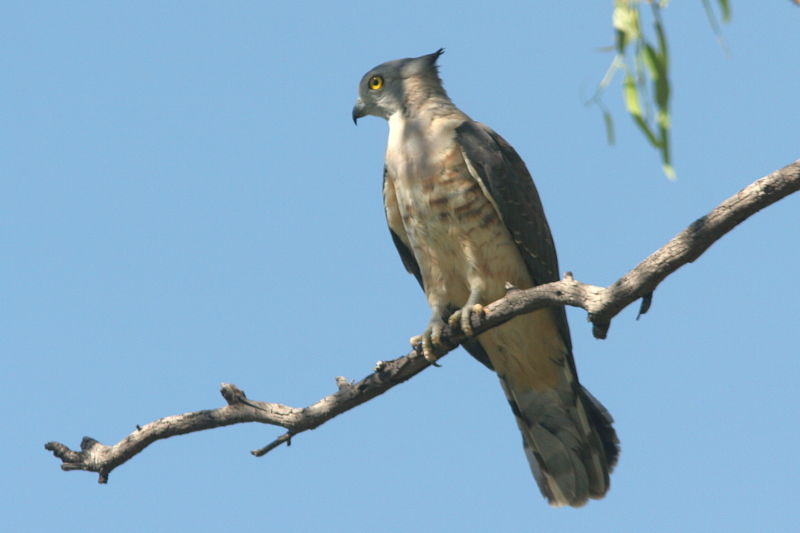
After more than three and a half months at Mornington Station, I’ve seen almost all the birds here. It’s been several weeks since I came across a new one (serious withdrawal) so, today, when a pair of Pacific Bazas flew into my fairy-wren territory, it was time to celebrate! A lifer!

A Baza is a small hawk with a crest. These ones were hunting in the outer foliage of paperbark trees, flapping ridiculously as they tried to grab prey with their feet. Definitely the highlight of my morning afield.

Barking Owls

At night, from my tent, I typically hear all sorts of noises: howling dingoes, hopping wallabies, screaming Bush Stone-Curlews, gruff Boobook owls, and yapping Barking Owls. It’s a jungle out there – or, at least, a tropical savanna.

Most of those things are hard to find during the day, though, so I’ve been happy to see the same Barking Owl twice this week during fairy-wren surveys along the north end of Annie Creek. It probably wasn’t quite as happy to see me, since I flushed it from its nap, but there you have it. Even got a photo to prove it.

I have now managed to see almost all the nocturnal birds around here on day roosts. Spend enough time outside, and you’ll flush them from hiding: Spotted Nightjar, Australian Owlet-Nightjar, Tawny Frogmouth, Southern Boobook, and Barking Owl. The only night bird I haven’t yet seen in daylight is the stone-curlew; they must hide exceedingly well, since they’re common enough on the roads after dark.

The Fitzroy

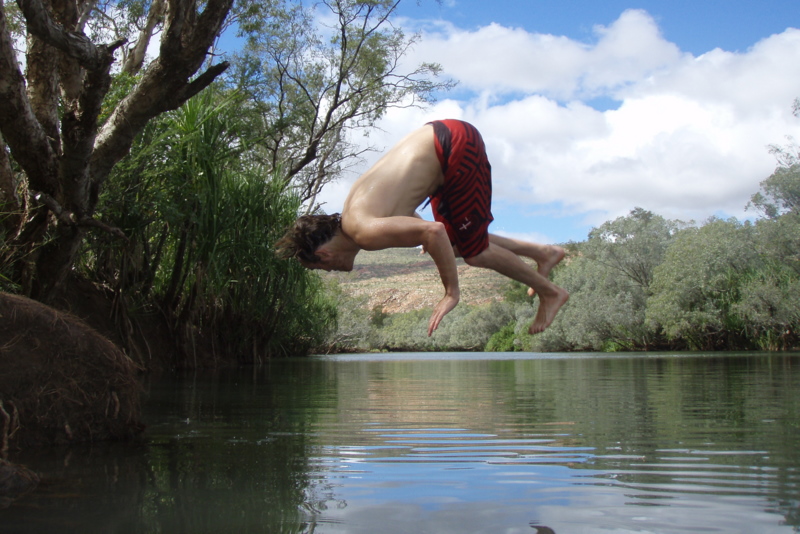
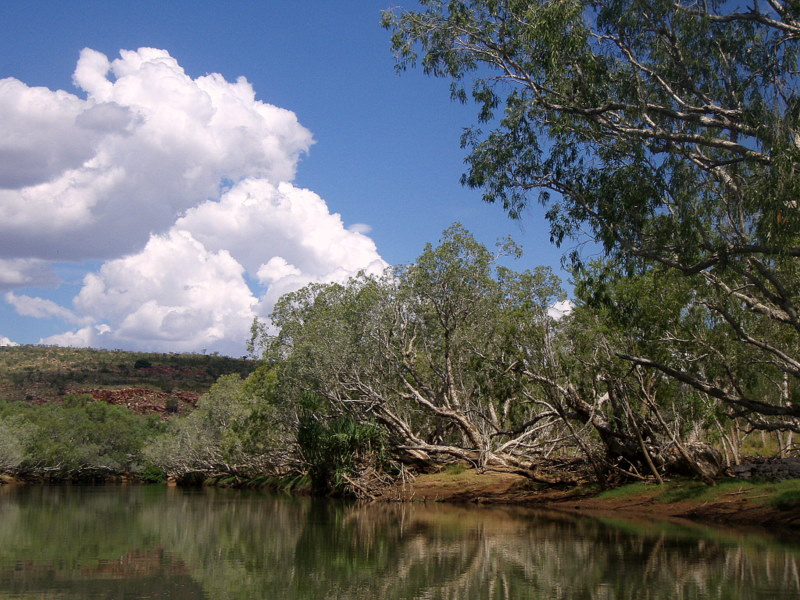
People here say the Fitzroy River, at its highest flood stage, has the 3rd highest flow of any river in the world. It’s a pretty flashy system, though, which means the water empties out quick. The rest of the year, like now, the Fitzroy is meek and mellow, shallow enough to wade across in some places – perfect for swimming, save the occasional freshwater croc.

We don’t worry too much about the freshies (they keep to themselves, except when they occasionally bite people). There’s a perfect swimming hole about 9 kilometers from Mornington Station, called Blue Bush (no idea why), which makes a nice afternoon getaway. A few of us went down there this weekend to float around in inflated truck tires and stare cautiously at some tourists. Rainbow Bee-Eaters and Agile Wallabies flitted and hopped, respectively, until the sun set around 5pm. Solstice has hit – the days are getting longer now!

Magnificent Tree Frog

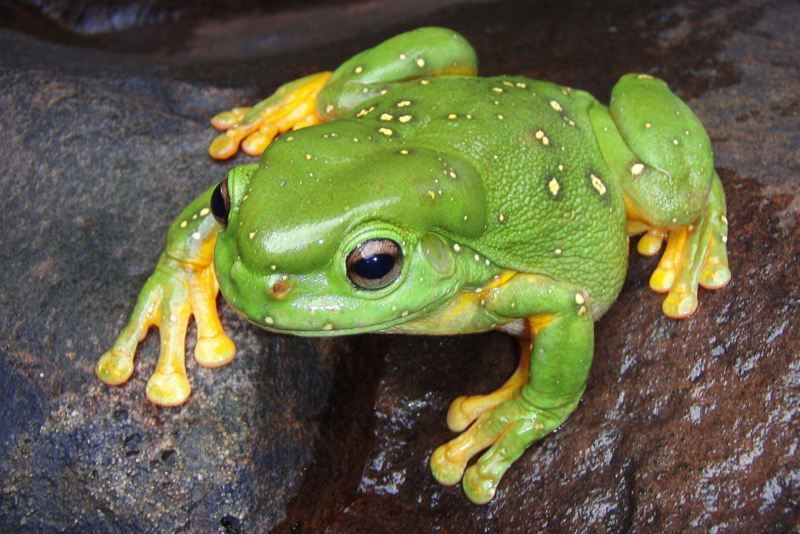
We found this mother-of-all-frogs one Sunday at a place called Bluff Pools, a permanent catchment set between massive limestone walls. It was near a Mulga Snake which seemed to be intent on hunting smaller frogs. The amphibian seemed less apt to kill me, so I stuck my camera in its face.

The frog didn’t mind a bit of wildlife paparazzi, and even smiled a bit for the photo op. It was big enough to cover the entire palm of my hand, with floppy padded feet sprawling over the sides of my wrist. James said it was a Magnificent Tree Frog (but the latin name is something to do with “splendid”). Anyway it seemed magnificent enough, pretty much the coolest frog ever, actually. I’m just glad Jess wasn’t there – the only person on station with an aversion to hoppy wet things. Don’t know how she survives with all the wriggly things in our outdoor toilets.

Mount Leake

Last Saturday I surveyed fairy-wrens past lunchtime, bushwhacking about 14 kilometers along the Adcock River – a tough morning outside. At about 2pm, Katherine spotted me arrive back at station grimy, sweaty, hungry, and sunburned.

“Hey, we’re leaving for Mount Leake in 20 minutes,” she said. “Want to come?”

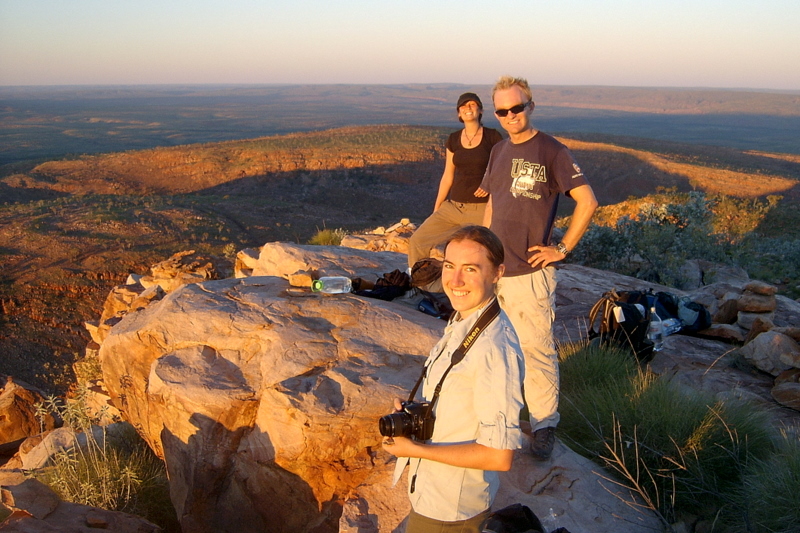
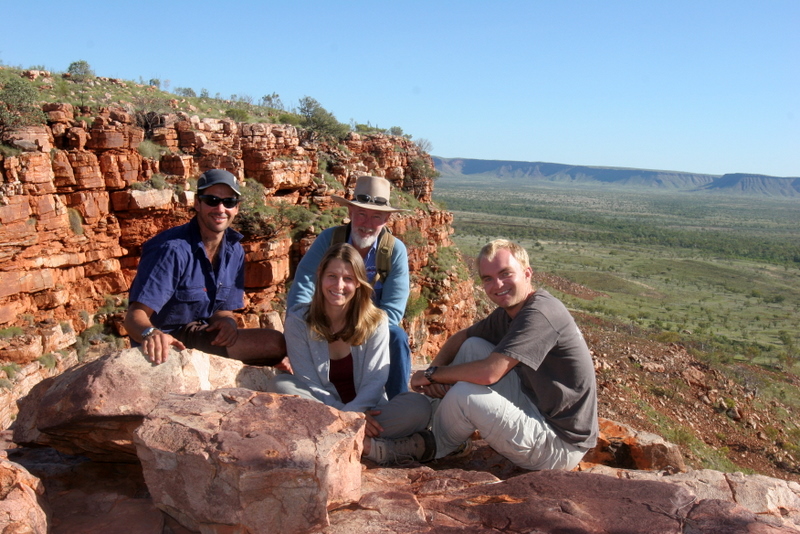
Well, sure. Instead of a nice shower and smoothie (my typical after-morning routine), I corralled together some water, food, sleeping bag, pad, and a few other necessities, threw them in a backpack, and jumped into James’ truck along with Bernie, Katherine, Claire, and Martha for the 2-day excursion. James drove us 40 minutes to the end of a 2-wheel track, dropped us, waved goodbye, and we spent the afternoon climbing Mornington’s highest prominence.

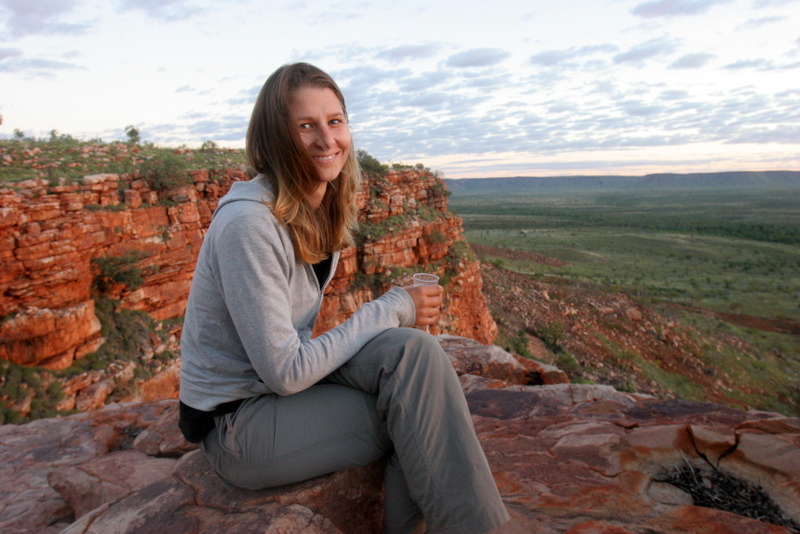
It was my second time up there this season, and, since none of the other four had been there before, I could point out the route. Watching sunset from the sandstone rocks, sleeping out under the stars, watching sunrise from my sleeping bag, snuggling down against a cold wind all night – yeah, it was pretty nice. But I was most proud of lighting a small fire with only grass and sticks – and just 2 matches – in the stiff wind. Say what you want, harnessing fire makes us human. In fact, it makes us men, full of hair and testosterone. Everyone, at heart, wants to be an annoying cub scout… (I tried singing Kumbaya, but it didn’t go down too well.)

And, yes, I’m still alive out here. Recent trouble with nonfunctional internet, nonfunctional camera, and nonfunctional Photoshop. Hope to get it all functional again soon…

Champagne Sunrise Helicopter Breakfast

For Sara’s last day (today), four of us were treated to an incredible breakfast.

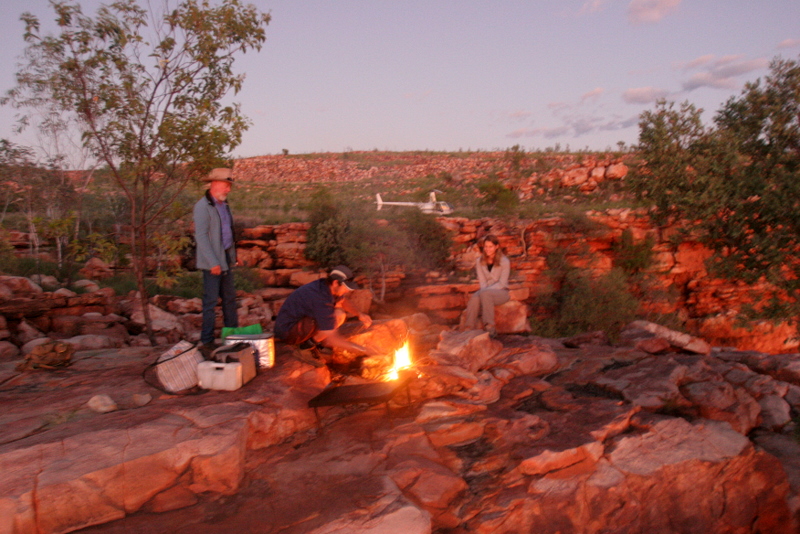
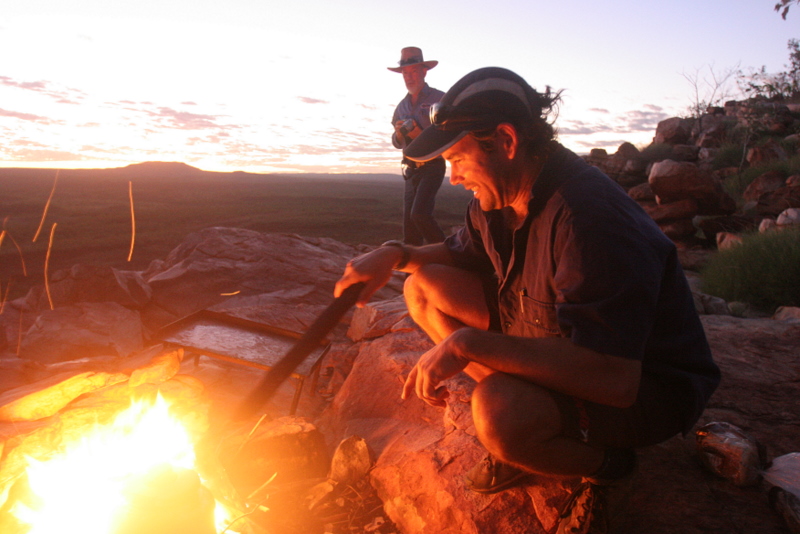
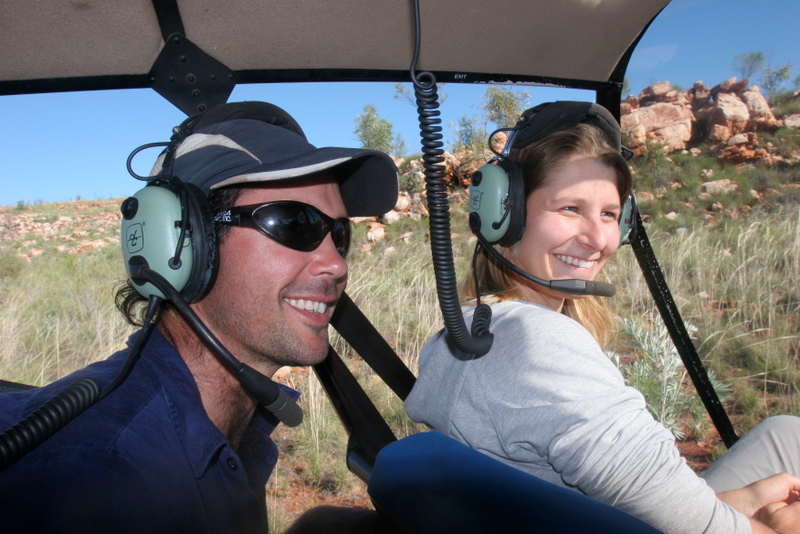
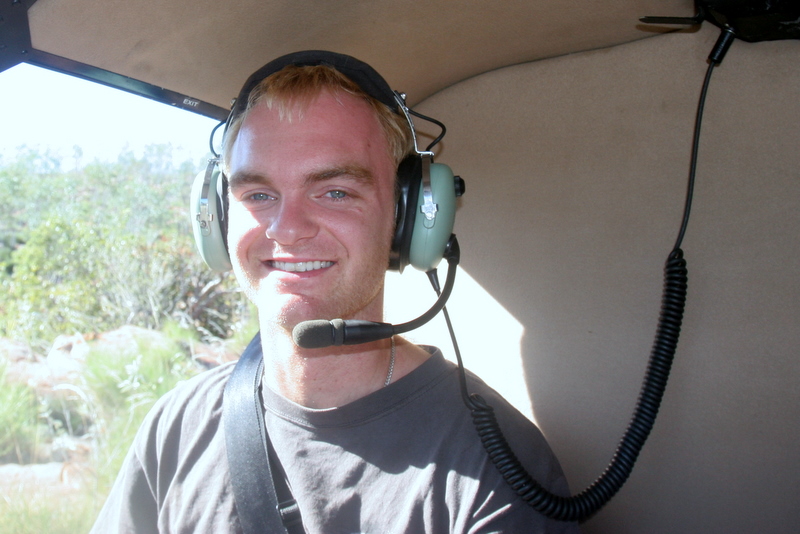
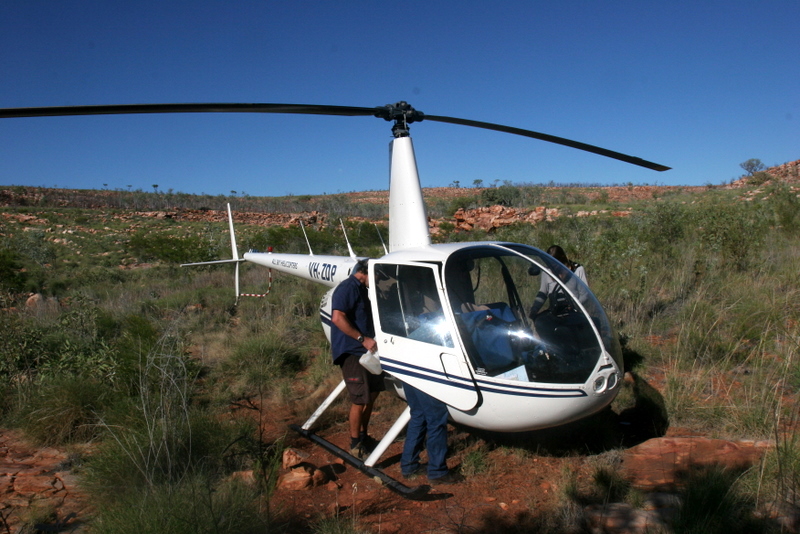
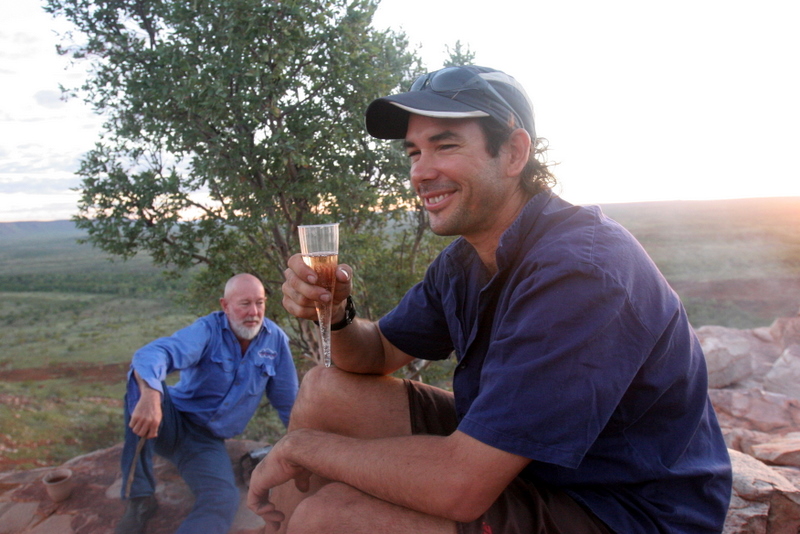
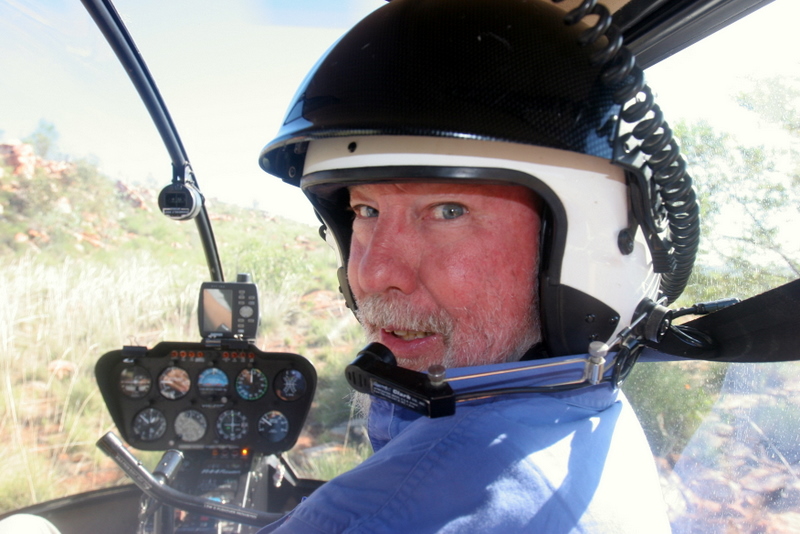
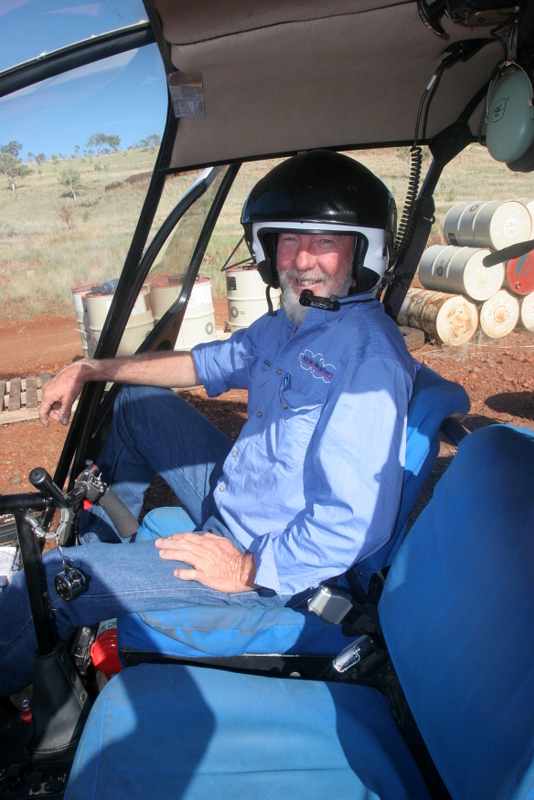
At 5 a.m. Butch, Swanie, Sara and I climbed into Butch’s tiny helicopter (flying with all the doors off) and rode in pre-dawn darkness to a secret overlook on a remote sandstone escarpment, where a dry waterfall cascaded hundreds of feet to a palm-covered valley, accessible only by chopper. As the sun exploded over the horizon, we were admiring the view, just finishing a bottle of champagne (three flutes each – tipsy by 6 a.m.!), and Swanie already had a good fire going for breakfast.

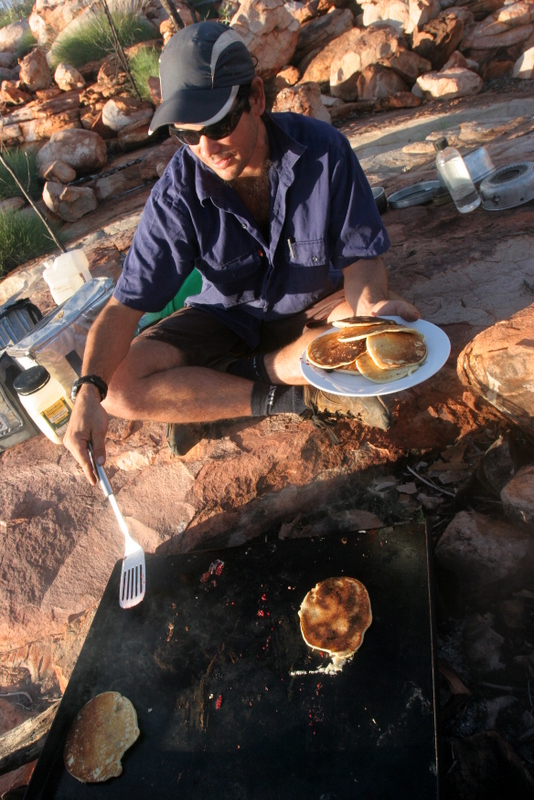
While it burned down to ashes, and a fresh morning breeze kept us cool, he pulled out all the stops, as if we were VIP donors: fresh pancakes, eggs, toast, coffee, and ginger tea – and we sat perched atop the cliff face, talking over the season and just feeling the best part of life, lost in an immense and empty landscape. The depth of relaxation, intensity of being – it defies description. Especially with good friends – something no tourist experience could ever capture! After a couple magic hours, we loaded back into the chopper and meandered back to the station in time for another day of field work. Just a quick morning breakfast flight!

Fruit Bats

Yesterday morning I woke in my tent, ate breakfast, suited up, hopped on a quad and drove several kilometers down a dirt track to start a fairy-wren survey of the central Adcock River. It turned out to be an eventful morning.

After a couple hours of pushing my way through a nearly impenetrable tangle of freshwater mangroves, I arrived at territory 219 – where all the action happened. I found the pair of fairy-wrens there, but they quickly skulked away into a wall of spiky pandanus along the water’s edge. When I tried to follow, the whole place exploded – with enormous bats!

Hundreds of Black Fruit Bats were roosting right where the fairy-wrens had disappeared. Each bat, with a face like a fox (hence the nickname “flying foxes”), was furry, jet-black, with a three-foot wingspan, and cranky. Every time I took a step, the bats screamed, flapped noisily, picked fights with each other, growled, cackled, and brought all kinds of debris to the ground. They smelled rank, with an acrid, musty, ammonia flavor, overwhelming the senses, and, as I crawled through the jungle-like vegetation, bats were on every quarter, some within several feet, all hanging upside down from branches, clinging with their feet and wing-claws, each the size of a small cat, black as night, pressing closer and closer, staring, jostling.

Half an hour later, I was a little way upriver when a very large bird came gliding around the corner – a White-bellied Sea-Eagle, the first I’ve seen at Mornington. In its talons was a Black Fruit Bat! The eagle was pursued by three smaller Whistling Kites, vying for position, hoping for a handout, but seemed nonplussed by the extra attention as it flapped powerfully above the water, disappearing silently around the bend. So much for that particular fruit bat.