The Thing With Feathers

“[Strycker] thinks like a biologist but writes like a poet.”

-THE WALL STREET JOURNAL

“This exploration of the lives of birds is perfect for spring.”

-PEOPLE MAGAZINE

“A lively and vibrant book. Bird journalism of the highest order.”

-THE WASHINGTON POST

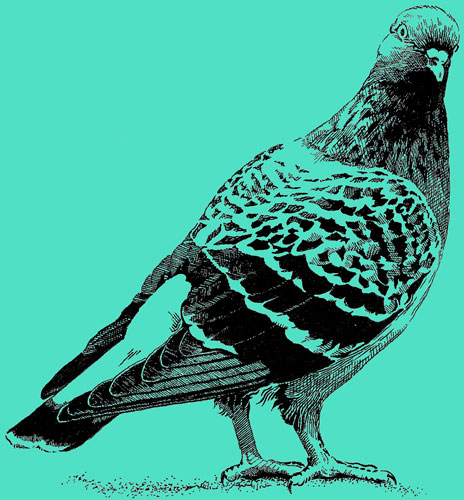
Pigeon
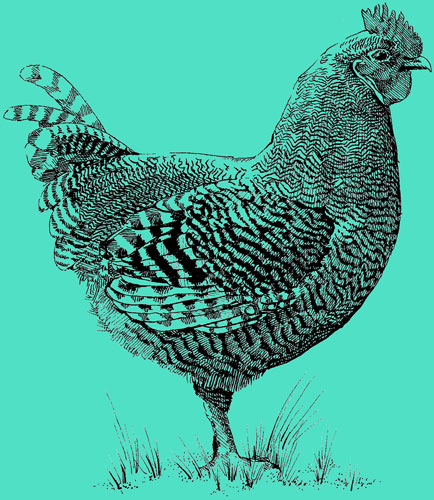
Chicken
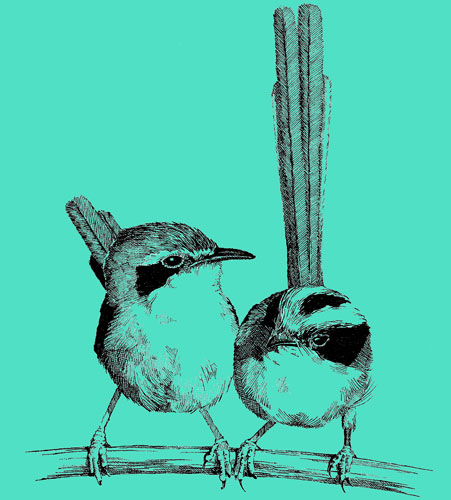
Fairywrens

Hardcover

Paperback

UK

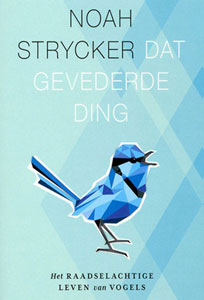
Dutch

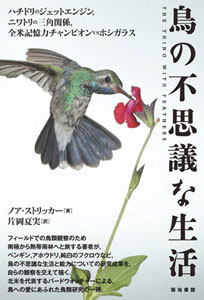
Japanese

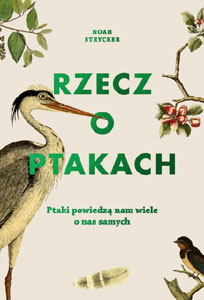
Polish

The Thing with Feathers in Chinese

Chinese

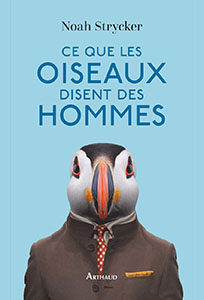
The Thing With Feathers - French

French

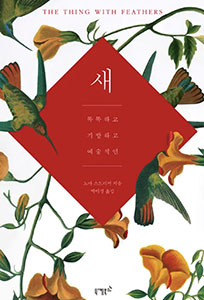
The Thing With Feathers - Korean

Korean

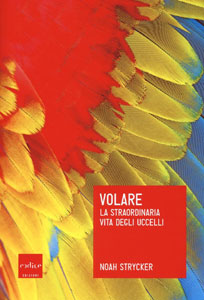
The Thing with Feathers in Italian

Italian

“An engaging work which illuminates something profound about all life, including our own.”

-THE ECONOMIST

Birds are highly intelligent animals, yet their intelligence has been little understood.

As scientists learn more about the secrets of bird life, they are unlocking fascinating insights into memory, game theory, and the nature of intelligence itself.

The Thing With Feathers explores the astonishing homing abilities of pigeons, good deeds of fairy-wrens, influential flocking abilities of starlings, deft artistry of bowerbirds, extraordinary memories of nutcrackers, lifelong loves of albatross, and other mysteries—revealing why birds do what they do, and offering a glimpse into our own nature.

This book made it to a New York Times bestseller list, has been translated around the world, and is illustrated with Noah’s own pen-and-ink bird drawings.

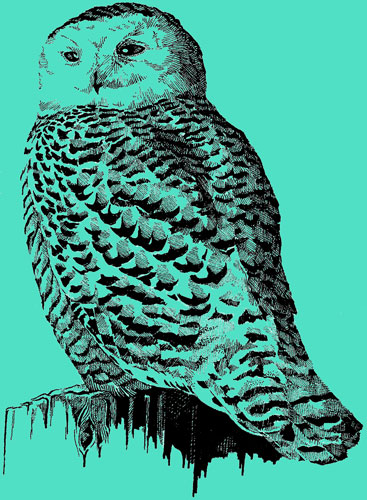
Snowy Owl

“Beautifully written, filled with strange and lovely details… a delightful read from start to finish.”

-THE BOSTON GLOBE

“[A] fun and enlightening read. Strycker knows words as well as birds.”

-NEWSWEEK

“As Strycker writes, ‘By studying birds, we ultimately learn about ourselves.'”

-NEW YORK TIMES BOOK REVIEW (EDITOR’S CHOICE)

TABLE OF CONTENTS: Click on any chapter to begin reading

INTRODUCTION

Imagine what might happen if birds studied us.

Which human traits would catch their interest? How would they draw conclusions?

Perhaps birds would begin, as most good scientists do, with the basics. They could spend a lot of time measuring the human body: weight, height, strength, pulse, brain size, lung capacity, color, growth rate, life expectancy, and so on. Academically minded birds could fill volumes with clinical, physical observations of people. Of course, they’d have to dispatch teams of field techs to collect the data. You might step out your front door one morning to find yourself entangled in an invisible net, surrounded by efficient young robins armed with rulers and scales. No doubt they’d soon send you on your way, none the worse for wear save the embarrassment of being caught and the loss of a few carefully plucked strands of hair. Then the robins would retreat to analyze their numbers.

How much could a bird really get to know us from these physical statistics? Take brain size, the feature we humans tend to be most proud of. A bird might rightly point out that, for sheer size, the human brain is nothing special; whale and elephant brains, for instance, are much larger. Birds could go a step further and compare human brain size to body weight, but even then, humans wouldn’t stand out: Our ratio of brain to body weight is about the same as that of a mouse (about 1/40) and is smaller than that of some birds (1/14); in terms of relative size, ants may have the biggest brains of all (1/7). To explain these mediocre numbers, humans have observed that, while brain size increases along with body weight, it follows a power law—in other words, brains don’t increase in direct proportion to bodies. But this formula was developed by mammals, for mammals. Birds, if they were to study our brains, might not embrace this logic. They might not think that the human brain—or the human animal, for that matter—was particularly interesting.

To really learn about humans, curious birds would therefore have to study more than just our bodies. They would have to closely observe how we behave, and then try to figure out why we act in the ways that we do—a monumental task. Consider the deceptively simple question: Why are you reading this book? You might say, “to learn about birds” or “for entertainment,” but your reasons probably go beyond that. Reading seems to fulfill a widespread human urge. Evolutionary biologists point out that people of many cultures enjoy reading despite the fact that, for most of human history, writing didn’t exist. Deciphering words on a page must take advantage of abilities that have been hardwired into us, but nobody quite knows why we like to read. And if we don’t know why we do it, what could a bird possibly make of you reading this book? How would a bird draw conclusions about a behavior so foreign to its own?

If birds set out to study human behavior, they’d almost certainly start with something familiar to them. They could, for instance, study our sleep habits. That team of robin field techs would camp out in a corner of your bedroom, making detailed notes about things like the color of your bed sheets and the volume of your snores. Surely birds would understand the need to rest each night. But what would they conclude about the wider human condition from these bedroom vigils, especially considering that birds don’t sleep the same way we do? Most birds are very light sleepers, rarely falling into the same dead-to-the-world state so familiar to people. And a few birds have particularly strange sleep habits—some swifts are thought to sleep on the wing, perhaps with half their brain turned off at a time. There is a type of parrot that sleeps hanging upside down, like a bat. Hummingbirds enter a state of near-death torpor after dark to conserve energy. Even the most basic behaviors, like sleep, become more complex the more they are studied—and more difficult to understand.

From their research of human habits, birds might even conclude that people wish they were birds. Think of the trillions we have spent on airplanes, space shuttles, and other flying machines over the past century. What is a bird to think? Would they argue over the differences between bird and human behavior—and whether those differences are absolute or merely a matter of degree, as Darwin once suggested? A bird might examine one of our airplanes with pity, and feel superior to its human study subjects. Who could blame it?

*****

The idea of birds studying people is pure anthropomorphism—assigning human characteristics to birds just to make a point. Birds have better things to do than study humans, and it’s debatable whether they even have the mental capacity to comprehend concepts like scientific inquiry. Birdwatchers often joke about birds watching them, but birds probably don’t nurture much interest in us beyond a basic fear of predators (check out the chapter Fight or Flight: What penguins are afraid of for more about this). We play only a minor role in the bird world.

And yet, the more that humans study birds and discover more about their behaviors, the more similarities we find between ourselves and our feathered friends. In almost any realm of bird behavior—reproduction, populations, movements, daily rhythms, communication, navigation, intelligence, and so on—there are deep and meaningful parallels with our own. A recent shift in scientific thinking about animal behavior encourages us to concentrate less on the uniqueness of humans and more on what the human animal shares with other animals. Traditionally human characteristics like dancing to music (see the chapter Beat Generation: Dancing parrots and our strange love of music), recognizing one’s reflection and sense of self (Magpie in the Mirror: Reflections on avian self-awareness), creating art (Arts and Craftiness: The aesthetics of bowerbird seduction), and even love and romance (Wandering Hearts: The tricky question of albatross love) are now recognized in birds. This isn’t anthropomorphism at all; anyone who suggests otherwise is ignoring a large part of what it means to be a bird. Moreover, a wave of neurological research on people indicates that the same behaviors, when expressed in humans, may be more instinctive than many of us realize, the result of eons of natural selection—behaviors that evolved, in other words, because they give us a survival advantage. So the perceived gap between humans and other animals has lately been shrinking at both ends.

I have been fortunate to spend much of the past decade in the field, working on hands-on research projects with scientists studying bird behavior. These projects have allowed me to spend months at a time watching birds in some of the world’s most remote places: the Ecuadorian Amazon, a penguin colony in Antarctica, the Australian outback, California’s Farallon Islands, Costa Rican and Panamanian jungles, the Galapagos Islands, the Falkland Islands, remote islands in Maine, Hawaii’s Big Island, and others. I’ve observed nearly 2,500 species of birds with the ever-growing realization that they are not our subjects, but rather lively, unpredictable individuals loaded with personality and spirit. It takes time to get to know birds, as it takes time to get to know anyone.

Some bird behaviors don’t apply to humans, and those are especially fascinating and exotic: a “sixth” magnetic sense (Fly Away Home: How pigeons get around), flocks that operate as magnets (Spontaneous Order: The curious magnetism of starling flocks), and the smelling power of Turkey Vultures (The Buzzard’s Nostril: Sniffing out a Turkey Vulture’s talents). It’s hard to imagine having such superpowers, though birds sometimes inspire us to try.

But, if you look closely enough, many seemingly incredible bird feats have human counterparts, with interesting lessons. Cooperative nesting in fairy-wrens (Fairy Helpers: When cooperation is just a game) helps illustrate why humans are usually nice to each other. The dazzling speed of hummingbirds (Hummingbird Wars: Implications of flight in the fast lane) serves as a warning about our own quickening pace of life. Snowy Owls (Snow Flurries: Owls, invasions, and wanderlust) confirm that not all who wander are lost. Even the domestic chicken (Seeing Red: When the pecking order breaks down) has something to teach us about the natural pecking order.

This book may be about the bird world, but it’s also about the human world. Birds can behave in curious, flashy, and startling ways, but they seek the same basic things we do: food, shelter, territory, safety, companionship, a legacy. Each of these chapters explores a compelling bird behavior and focuses on a bird that embodies it. Here you’ll read one amazing bird story after another. Prepare to be blown away by, for example, the memory of Clark’s Nutcrackers (Cache Memory: How nutcrackers hoard information), which show us what the brain is capable of, and might inspire us to boost our own brainpower.

By studying birds, we ultimately learn about ourselves. Bird behavior offers a mirror in which we can reflect on human behavior. In The Thing with Feathers, the mirror is all around, glinting from the wingtips of hundreds of billions of the 10,000 species of birds that share this planet with us. Lucky for us, birds are everywhere. All we have to do is watch.


FLY AWAY HOME

How Pigeons Get Around


On a recent birding trip, when I stopped at the remote outpost of Fields, in southeast Oregon, to grab a burger, I almost didn’t notice the pigeon in the parking lot. Fields is not much more than a store, an inn, and a stand of cottonwoods along an open-range highway in a zip code containing fewer than 80 residents. Several years ago, I watched an airplane land on the highway and taxi right up to the gas pump. The pilot had to be more careful of cows than cars. Fields doesn’t get much traffic.

The pigeon was quietly pecking around the pavement and scraps of tumbleweed just outside the station’s screen door, looking like it maybe wanted to come inside. As I finished the last bites of my burger, something clicked. Here, hundreds of miles from the nearest McDonald’s, any pigeon was a rarity.

“Hey, look, a pigeon!” I said.

Some other travelers also noticed it, and shooed the bird past the gas pump. It hardly moved until they walked right up to it.

“Seems pretty tame,” my dad and fellow birder said. “Wonder where it came from?”

“I bet we can find out,” I replied. “Check out the bands on its legs. I think it’s a racing pigeon.”

I had recently been researching homing behavior and my head was full of odd tales of transatlantic Manx Shearwaters, a wonderdog named Bobbie, and a million-dollar pigeon race in South Africa. Now an actual racing pigeon had dropped out of the sky in the middle of nowhere, straight into my lunch break—a strange coincidence.

I grabbed my binoculars, passed through the screen door, and began sidestepping in circles around the bird in the parking lot, angling to read its digits. If I could get the full number, I could find out who owned the bird and, possibly, how it ended up all the way out in Fields.

My dad was less subtle.

“Here, help me flank it,” he said as he rapidly closed in. The pigeon scooted away at the last second, but stopped within a few feet and glanced back with a flirtatious look. My dad charged again, but the wily pigeon zigzagged out of reach. I started to take off my jacket to toss over the bird, but, before I could let fly, my dad made a barehanded grab on his third try. The captured bird was nonchalant. It rested comfortably in my dad’s hands while staring pigeon-eyed at us, and seemed to expect to be fed.

It looked like a handsome city pigeon with some speckled white feathers on its head, and sported a green band on one leg and a red band on the other. The green one, which held a computer chip, was blank, but the red band was clearly inscribed: AU 2011 IDA 1961.

“Bingo,” I said.

After recording the number, we let the bird free in the parking lot, where it went back to pecking windblown seeds out of cracks in the pavement. Was it lost? Or, like us, just refueling? It would be an interesting mystery to solve. We headed back inside to pay for our burgers.

Birds are amazingly good at navigation, so I thought the pigeon stood a fair chance of making it home. Racing pigeons are deservedly famous for their orienteering skills, but lots of birds have the same ability. I recalled the incredible story I’d heard about an experiment with Manx Shearwaters in the 1950s.

“Hey, did you know that a shearwater once covered 3,200 miles across the Atlantic to get home?” I said, as we settled the check.

My dad is used to this sort of comment from me, but the waitress gave us a strange look.

[end of chapter preview]

SPONTANEOUS ORDER

The Curious Magnetism of Starling Flocks


In early November 2011, my inbox suddenly exploded with emails from friends, relatives, and casual acquaintances, each one linking to the same two-minute online video clip, titled “Murmuration.” Unsure what to expect, I clicked on the link.

For the first 20 seconds, the video shows two young women canoeing on a damp evening in Ireland, filming each other with a shaky hand from inside the boat. You begin to wonder what the point is. Then, at 0:23, the view zooms up and out, New Age music fades in, and, as the camera adjusts its exposure, you realize that the Irish dusk is full of flying birds—a lot of birds, silhouetted in impossibly coordinated patterns from one horizon to the other, blotting out the clouds with their thousands. For the next 81 seconds, the birds perform an intricate display of aerial formation, bunching and flattening like a throng of bait fish under attack; you can even hear the whoosh when they make a low, strafing pass overhead. Then the birds fly away and it’s over.

The two women, film students named Sophie and Liberty, were working on a graduation project for the London College of Communication when they decided to take their canoe trip. They had no idea that an enormous flock of European Starlings habitually roosts in the area where they planned to visit some ruins on a small island. When the women posted their impromptu starling footage online, hardly anyone noticed at first—it averaged 10 views per day for the first week. Then the Huffington Post linked to it and the video suddenly went viral, garnering 1.05 million views in 24 hours. Over the next few months, more than 10 million people would see it.

If you’ve ever watched a flock of starlings (poetically called a murmuration, just as crows make a murder and owls a parliament) go to roost, you know why the video mesmerized so many distracted web surfers. Starlings habitually gather at night, sometimes by the hundreds of thousands in late summer and, in the evening, just before they settle into bed, the birds collectively patrol the airspace above their sleeping quarters, sometimes for half an hour or more. Few birds in the world form such dense, tight flocks. Why starlings do it is an open question. Burning extra energy before drifting off? Guiding incoming stragglers? Keeping an eye out for predators? But there is no dispute that the spectacle is awe inspiring. The aerial displays resemble dense smoke caught in the grip of an invisible tornado. It’s hard not to wonder how the birds stay in such a rapidly changing formation and manage not to bump into one another.

The aesthetics alone are inspiring. New York-based photographer Richard Barnes, best known for his starkly artistic portraits of Unabomber Ted Kaczynski’s cabin, released a captivating collection of black-and-white images of starling flocks over Rome in 2005. His photos are carefully framed against urban horizons. Some are simply beautiful, others sinister and Hitchcockian, but all are somehow magnetic (more on that later). In a statement accompanying Barnes’ images, author Jonathan Rosen observes, “Part of the fascination of the starlings is the way they seem to be inscribing some sort of language in the air, if only we could read it.”

[end of chapter preview]

THE BUZZARD’S NOSTRIL

Sniffing Out a Turkey Vulture’s Talents


One day in high school, I told my parents I wanted to photograph vultures.

“Great,” they said. “But how will you get close enough?”

“By putting a dead deer in our yard.”

I’d been inspired by an episode of David Attenborough’s Life of Birds documentary, the one where the British filmmaker ventures into a Trinidad rainforest carrying a fist-sized hunk of rotting beef. With great flourish, Attenborough hides the meat under a layer of wet leaves on the dark jungle floor and then backs away, muttering lilting phrases like: “Their beaks are quite adequate for tearing off strips of flesh.” Within 45 minutes, a Turkey Vulture appears out of nowhere and uncovers the delicacy—quite a trick, for filmmaker and scavenger alike.

If Sir David could lure a vulture with a funky old steak, then how many vultures might a whole deer carcass attract? Just imagine how smelly that would be.

My parents were used to this sort of scheme. They weren’t sure how or why their son had become so obsessed with birds, but, considering the various other possible vices, had resigned to embrace this one. Their only stipulation was that the dead animal be placed far enough from the house to not stink up the kitchen.

I’d recently acquired my driver’s license and had been cruising the local birding hotspots in an old, white Volvo sedan. The car was built like a tank and boasted a two-body trunk—or at least, to my discerning eye, a boot roomy enough for one average deer carcass. I stocked the trunk with gloves and Hefty bags, and began scouring the countryside for flattened deer.

[end of chapter preview]

SNOW FLURRIES

Owls, Invasions, and Wanderlust


Just after 7 a.m. on October 28, 2011, a commuting birder in northeast Minnesota was startled to notice a Snowy Owl perched on a lamp post, like a ghostly apparition, next to the bridge that connects Duluth to Superior, Wisconsin. He called his wife, who relayed the sighting on a local rare bird alert. Three days later, on Halloween, another Snowy Owl eerily materialized in southwest Minnesota. Then several more popped up across the Midwest. Birders all over North America began to take note. Was this the beginning of an invasion?

By late November, hundreds of Snowy Owls were lighting up birding hotlines from Oregon to New Jersey and as far south as Kansas, causing expensive traffic jams of cameras and spotting scopes wherever the owls appeared. There could be no doubt: The winter of 2011–2012 was shaping up to be one of the biggest Snowy Owl irruptions—or population shifts—in history.

On Thanksgiving Day, staff at Honolulu International Airport discovered a white owl sitting on the airfield—the nearest approximation to tundra in the middle of the Pacific Ocean—and, never having dealt with such an obstacle, promptly shot the bird in the name of aircraft safety, never mind that it was the first wild Snowy Owl ever to have appeared in Hawaii. At Logan International Airport in Boston, where a few owls had landed in past winters, officials were more level headed. Inundated by more than 40 Snowies, they painstakingly captured each one, marked the birds’ heads with colorful paint to keep track of them, and moved them to safer locations.

As December and January unfolded, thousands more Snowy Owls drifted south. In Missouri, where the previous record high count had been eight, 55 were discovered. Kansas had 160. One birder in South Dakota ticked 20 of them in seven hours, while observers in Vancouver, B.C., counted 31 in a single spot at Boundary Bay. A Dallas police officer who casually mentioned to a friend that he’d been watching a Snowy Owl on a light fixture at his local marina caused a stampede of chasers; it was the first one in Texas in 50 years.

Nobody forgets their first Snowy Owl sighting. To see one, two feet tall, nearly pure white with piercing yellow eyes, a wild incarnation of Harry Potter’s pet Hedwig, is to gaze into the very soul of the Arctic. Most of us rarely get the chance because Snowies usually stay out of sight of civilization, tucked in the narrow latitudinal belt between the Arctic Ocean and boreal treeline from northern Europe to Russia and Canada, in some of the harshest terrain on Earth. They spend most of their lives in the chilly, windswept tundra, where a steady supply of lemmings—small, cute rodents, related to voles, which occupy tundra, eat grass, and reproduce a lot—feeds generation after generation of owls.

[end of chapter preview]

HUMMINGBIRD WARS

Implications of Flight in the Fast Lane


Liz Jones, proprietor of the Bosque del Río Tigre lodge in Costa Rica, has given up on feeding hummingbirds near her house.

“We put up our first sugar water feeders about 10 years ago,” she explained as we sweated one morning in the tropical heat outside the lodge’s lush front entrance. “It took several months for the birds to discover the feeders, but, when they did, they were quite active. We had nine different species of hummingbirds making regular visits, and many of them nested in our garden.”

I could imagine how awesome this must have been. Because the feeders were in plain sight of the outdoor dining area, guests could watch the action as they ate their meals. Birders delighted in seeing their first-ever Bronzy Hermits, Charming Hummingbirds, Long-billed Starthroats, Violet-crowned Woodnymphs, and White-necked Jacobins as they sipped their wine each evening.

Things went well with the feeder setup for a couple of years, until a feisty Rufous-tailed Hummingbird arrived. Four inches long and the weight of a nickel, he was handsome enough, with an iridescent green body, red lance of a beak, and orange-brick tail. But he was also meaner than all the other hummingbirds and never let anyone forget it. When he wasn’t gorging himself on sugar, the aggressive hummer spent almost all his time chasing everyone else away; this guy was the tiniest bully Liz had ever seen.

She tried moving the feeder, but he just moved with it. She tried putting out more feeders so he couldn’t possibly guard them all, but another Rufous-tailed showed up and they joined forces to defend against all comers, in all corners of the garden. The yard rang constantly with the sound of miniature aerial dogfights. She tried taking down all her feeders but one, thinking that the Rufous-tailed would be overwhelmed by the other hummingbirds flocking to a single spot, but that just made it easier for him to fend them off. She even tried putting a feeder inside the lodge. A shy Long-billed Hermit learned to dart indoors for quick sips, but, lamentably, the other tropical hummingbirds couldn’t figure it out.

Pretty soon, the other hummingbirds stopped visiting entirely, leaving the Rufous-tailed to sit, hour after hour, next to a lonely feeder. Doubtless, he enjoyed his life, king of an unlimited supply of food, but he wasn’t very entertaining for visiting birders.

“It was boring,” Liz said after she’d told me the whole story. “The Rufous-tailed chased the others away, so, instead of a buzzing hummer setup, we eventually just had this one bird, day after day.”

After five years, several more Rufous-tailed Hummingbirds arrived. Between them, they wouldn’t let a single other hummer anywhere near the lodge, much less the feeders. Where several species used to nest among the flowers in their garden, now there was just one.

Liz tired of pampering her resident bullies. She took down the feeders and never tried attracting hummingbirds again. By eliminating the feeder setup, she hoped to return to a more balanced mix of hummingbirds around the lodge, like there had been before the feeders went up. Some of the shyer hummers did return, but only gradually.

It was all very vexing. The feeders supplied unlimited nectar and when they were nearly empty, Liz always refilled them. If the hummingbirds could just get along, they could eat all they wanted without wasting energy on fighting. Why were they so selfish? Hummingbirds are supposedly smart—they may have the largest brain size, relative to body mass, of any bird in the world—but they weren’t acting logically. It didn’t make sense.

[end of chapter preview]

FIGHT OR FLIGHT

What Penguins are Afraid Of


The first time I walked through the Adélie Penguin colony at Cape Crozier, Antarctica, I quickly learned to step carefully. Researchers have scrutinized aerial photos and counted 300,000 penguins here—about the population of Pittsburgh—crammed into a single valley about one mile wide, next to the edge of the Ross Ice Shelf in a remote, frozen region claimed optimistically by New Zealand. The birds nest within pecking distance of one another in swirling, dense swatches that, in satellite images, resemble a grainy photocopy of a Rorschach test. On the ground, it’s chaos. I found myself sidestepping along the edges of two-foot-tall crowds within the metropolis, detouring around stubborn penguins that wouldn’t get out of my way.

It was 20 F below zero with a biting wind, and I wore full polar kit: insulated white bunny boots, black snow pants, layers of long underwear that would not be changed for weeks at a time, rainbow-tinted ski goggles, and a red down jacket with its hood lined in coyote fur. The penguins regarded me like I’d just dropped in from outer space.

Personally, I’d be a bit frightened if a gigantic, multicolored alien suddenly appeared next to my house, but these birds weren’t afraid, despite having had relatively little human contact. They were simply curious, often approaching with timid steps if I paused quietly for a moment. Penguins untied my shoelaces, hesitatingly preened the side of my sleek pants, and fell in line behind me in a drawn-out game of follow-the-leader. The followers stopped when I stopped, walked when I walked, and froze like a group of guilty thieves whenever I suddenly turned on them. As I wound my way deeper into the valley, 50 penguins followed in a gaggle.

Such trust is remarkable in a wild creature; perhaps it helps explain the star appeal of penguins—why a bird in one of the world’s most remote places is also one of the most well-studied species on Earth, and why, as the actor Joe Moore has been credited with observing, “it is practically impossible to look at a penguin and feel angry.” The arrival of humans hasn’t diminished the birds’ energetic personality. They are still as approachable today as they were when the first explorers stepped onto the Antarctic continent.

[end of chapter preview]

BEAT GENERATION

Dancing Parrots and Our Strange Love of Music


When Dr. Aniruddh Patel first watched the video of Snowball, as he later reported to The New York Times, his “jaw hit the floor.” Patel is an associate professor of psychology at Tufts University. Snowball is a Sulphur-crested Cockatoo—a type of large, white parrot with an ornate yellow crest, native to Australia—who likes to dance. In 2007, destiny, in the form of YouTube, brought the scientist and the dancing bird together.

If not for the internet, Patel might never have met Snowball, who became a viral sensation after his owner in Indiana posted some impromptu footage of the bird’s dance moves. In the video, the cockatoo capers on the back of a chair to the Backstreet Boys song “Everybody.” He sways rhythmically, bobs his head up and down, energetically waves his feet, and twists in sync with the soundtrack, looking for all the world like a teenybopper rocking out to those repetitive chords and bass lines. The video of the dancing bird had 200,000 hits in one week, and, at last count (five years later), more than five million views on just that one clip.

Patel had never seen anything like it. All his life, he’d been fascinated by music and the brain. When his Ph.D. advisor, the luminary American biologist E. O. Wilson, sent him to Australia to study ants in 1990, Patel tried to emulate his professor’s devotion to tiny insects. But, one day, he realized that he was more interested in the human biology of music. “You must follow your passion,” Wilson reportedly advised, so Patel gave up studying ants, left Australia, and dedicated himself to a groundbreaking thesis in language and music at Harvard University. That launched him into the field of neurobiological research, which was just then beginning to focus on brain imaging; Patel subsequently published, among other things, a fascinating paper showing that our brain processes language and music in much the same way.

Snowball also bounced around a bit before making his mark in the world. Like many pet parrots, he rotated through a series of owners. Nobody knows where he came from or who raised him as a chick. When he was about six years old, he was adopted by a family in Indiana, who kept him for several years. But when the daughter in the family went off to college, Snowball began getting cranky and aggressive. The girl’s father decided that the parrot wasn’t getting enough attention, so he relinquished Snowball to a rescue shelter called Bird Lovers Only that specializes in caring for neglected birds, also handing over Snowball’s favorite CD: the Backstreet Boys. “Just play it for him and watch what happens,” the owner suggested.

[end of chapter preview]

SEEING RED

When the Pecking Order Breaks Down


Let’s talk chicken.

By the end of the 20th century, domestic chickens outnumbered humans by about four to one on this planet, distinguishing them as the most abundant bird species on Earth. Actually, chickens are the world’s most numerous reptile, amphibian, mammal, or bird, period. At any given time, the globe hosts about 20 billion domestic chickens, though most don’t live very long. The average North American eats more than 50 pounds of chicken a year (the equivalent of about 27 individual birds), which ranks, pound for pound, slightly less than beef and a bit more than pork.

Birdwatchers tend to denigrate chickens because domesticated species don’t qualify on official life lists. Unless you happen to prowl the tiger-infested jungles of India, where a few wild Red Junglefowl—the tropical ancestor of today’s McChicken—still flock together, you won’t get much credit for observing poultry. But we should pay attention to chickens, if for no other reason than their familiarity.

We can learn a lot about the world from farm fowl, as a six-year-old Norwegian boy demonstrated a hundred years ago.

*****

That young boy, tending his mother’s chicken coop outside of Oslo, noticed something curious about the birds he fed every morning. When any two hungry chickens met at the food tray, one would always make way for the other, patiently waiting its turn. Instead of fighting like unruly teenagers over Thanksgiving dinner, the chickens usually formed an orderly line with minimal fuss.

Furthermore, the order was utterly predictable. One particular hen was always the first to eat, followed by a second individual, then a third, and so on. At the water dish, their behavior was the same. If one tried to jump the line, it was barraged by pecks from the birds in front, and it quickly retreated.

By the time he was 10, Thorleif Schjelderup-Ebbe was keeping his observations in detailed notebooks. He’d discovered that the order of the feed line was based on aggression; certain hens, for some reason, always dominated others. So Schjelderup-Ebbe—let’s call him Thor—began charting aggressive interactions among the birds in his mother’s chicken coop, hoping to figure out, scientifically, whether his ideas made sense.

[end of chapter preview]

CACHE MEMORY

How Nutcrackers Hoard Information


Things were not going well for 35-year-old scouting agent William Clark (of Lewis and Clark fame) on August 22, 1805. He was exploring the rugged Salmon River canyon, in what is now northern Idaho, on a typically harrowing day: A hunter from his group had just returned from a close run-in with some Native Americans, the terrain was brutally steep and rugged, and he didn’t know where he was going. But sometime that afternoon the explorer noticed a bird interesting enough to record in his now-famous journal:

“I saw to day [a] bird of the woodpecker kind which fed on Pine burs it’s Bill and tale white the wings black every other part of a light brown, and about the size of a robin.”

He didn’t have time to elaborate (or punctuate) further, but his partner, Meriwether Lewis, described the same bird less than a year later with better detail and leisure, while waiting patiently for snow to melt in the Bitterroot Mountains on the expedition’s eastward return journey. Lewis correctly surmised that Clark’s black-and-white bird wasn’t a woodpecker, but a corvid—related to crows and jays.

“Since my arrival here I have killed several birds of the corvus genus,” Lewis wrote. “It is about the size and somewhat the form of a Jaybird . . . it resides in the Rocky Mountains at all seasons of the year, and in many parts is the only bird to be found.”

Lewis’ specimens of this bird were eventually deposited in the Peale Museum in Philadelphia. Alexander Wilson included an illustration of the new bird in his 1811 book, American Ornithology, calling it “Clark’s Crow” with proper credit to the discoverer. (To be fair, Lewis was honored with his own namesake, the Lewis’ Woodpecker, which he had described in his journal the day before writing about the new crow-like species.) The name stuck but was later modified, and we are left today with an explorer’s legacy: the Clark’s Nutcracker.

If you’ve spent time in the rugged mountains of western North America, you’ve probably heard and seen nutcrackers. The birds are easy to identify: big, black and white overall, with flashing white wing and tail patches in flight and a cool gray body. No other bird looks anything like a nutcracker. And they make themselves obvious, perching on exposed treetops and flying around high meadows, searching boldly for their next meal. Particularly fearless nutcrackers are sometimes called “camp robbers” for their habit of stealing food from unwary backpackers. Even if you hiked blindfolded into the mountains, you’d still know the nutcrackers were there. The characteristic, loud kkrrraaaaaaack provides a running soundtrack in high-elevation pine forests, where the noise echoes off craggy peaks just as it did hundreds of years ago.

[end of chapter preview]

MAGPIE IN THE MIRROR

Reflections on Avian Self-Awareness


When a group of German researchers announced in 2008 they had discovered that captive Eurasian Magpies can recognize themselves in a mirror, many scientists were surprised. Until then, only humans, the great apes, orcas, dolphins, and elephants—large mammals with big brains—had been shown to recognize their own image, despite a slew of experiments with mirrors and other animals, including many other types of birds. Yet this particular study showed unambiguous results. Three out of five individual magpies, named Gerti, Goldie, Schatzi, Harvey, and Lilly, clearly recognized the bird in the mirror as themselves.

The mirror test, as it’s generally known, is straightforward: Stick an animal in front of a mirror and watch what happens. If it recognizes its reflection, it passes; if not, it fails. The tricky part is interpreting the results. There are two main problems: Determining whether the animal really recognizes itself, and then figuring out what it means.

The German researchers knew this, and documented their study well enough to allay suspicion that the birds had really passed the test. They performed three different experiments with their five captive magpies. First, they introduced the birds to an open room with a dull gray plate leaning against one wall, and then replaced the plate with a mirror to see whether the magpies behaved differently in front of their reflection. Second, to gauge interest in the mirror, the researchers herded the magpies into an aviary with two connected compartments, one with the mirror and one with the nonreflective plate, and recorded how much time the birds preferred to spend in either side. Finally, the researchers marked the five magpies with a spot of colorful dye on the chin that would be invisible to the birds except by using the mirror. If the birds scratched at the spot on their own chin while gazing into the mirror, they would show a basic understanding that their reflection wasn’t some other bird with something on its face. This type of “mark test” is the traditional cornerstone of mirror experiments with animals.

[end of chapter preview]

ARTS AND CRAFTINESS

The Aesthetics of Bowerbird Seduction


When I stumbled into my first bower, on a blistering afternoon in the Australian outback, I thought it was some kind of religious altar or maybe a practical joke. I’d been tramping through dense bush all morning and unexpectedly emerged into a 15-foot-wide clearing, in the center of which stood a wicker-like construction, about two feet high, resembling a small hut. It was formed of twigs woven vertically into two thick, parallel walls that created a tunnel in between; and just outside each entrance lay a pile of white stones, bleached bones, and green leaves, clearly arranged by design. The whole tidy array was surrounded by an expanse of ground so bare that I wondered whether it had been vacuumed.

As I puzzled over the curious offering, a football-sized brown bird materialized on a branch at the edge of the clearing, announcing its presence with an explosion of chattering and snapping sounds. Suddenly, it all made sense. I had wandered into the bachelor pad of Australia’s winged Casanova, the serial womanizer of the avian kingdom—the Great Bowerbird.

I stepped back a few paces and tried to recall everything I knew about bowerbirds while this one, apparently a trusting sort, hopped down to ground level and with barely a glance in my direction, set to work on his bower. He first checked over the piles of loose objects, which must have been selected and gathered with care from the surrounding bush. Head cocked, he stepped around the stones and leaves to admire his creation from various angles, occasionally darting in to nudge one of the objects with his beak like a painter correcting some tiny mistake. Satisfied, the bird then spent a few minutes weaving fresh twigs into the bower, painstakingly poking them in one at a time to strengthen the hut. I stood in quiet amazement: This was like watching a nature documentary on TV.

Bowerbirds have long been renowned for their bizarre and compelling courtship rituals. Instead of using just songs or bright feathers to attract a mate, male bowerbirds create elaborate structures to show off their unique talents of architecture and design, dedicating great energy to the task. Building the perfect bower can take 10 months of each year, but it’s a worthy project because females pick their mates solely by inspecting these bachelor pads, open-house style. After mating on the spot, the female flies off to build a separate nest, lay eggs, and raise chicks by herself. Male bowerbirds can’t afford to spend that much time away from their life’s work, or they’ll lose their seductive edge. A successful male might mate with dozens of females over the course of one season.

[end of chapter preview]

FAIRY HELPERS

When Cooperation is Just a Game


Whenever the temperature climbed above 110 F, which happens often in northwest Australia, I would retreat into the walk-in refrigerator at Mornington Sanctuary, pull the heavy door shut, turn out the lights, and think about Purple-crowned Fairy-Wrens. Never mind how the dainty birds survive in an environment so extreme that even Sir Sidney Kidman—Australia’s famous cattleman, who, in the early 1900s, turned five shillings and a one-eyed horse into ownership of 3 percent of the entire continent—couldn’t handle the area. (He cited “natives spearing the cattle” and “the precipitous state of the country” when he abandoned Mornington in 1935; no fridge back then.) I was rather more impressed with the fairy-wrens’ social habits. In the loneliest corner of the scorched Outback, where groceries are delivered by bush plane and solitude lies like a hot blanket, miniature soap operas play out every day. You just have to know where to look.

Fairy-wrens, with the body and bounce of a ping pong ball fixed with a pencil-sized tail, make up for their diminutive stature with blatantly colorful attire. There are 14 species of fairy-wrens overall, nine of them in Australia, all of them visually sparkling. Males of the Purple-crowned variety, which is endemic to the arid northern interior, sport a candy violet hairdo, black cheeks, and a long, expressive tail that shimmers as blue as the sky. Females are more demurely patterned with slaty crowns and a reddish cheek patch broken by a white eye ring. But it’s their cooperative personality that most fascinates fairy-wren admirers.

A hundred yards from my icebox retreat, one particular female Purple-crowned Fairy-Wren could reliably be found industriously tending her brood. As fairy-wrens go, she was relatively hard working. Along with a studly mate, she’d already raised two healthy nestlings who had left the nest a couple months earlier. Now she was in charge of a second nest, a tightly woven ball of grass and leaves with an entrance hole on the side, protected by a stalk of spiky Pandanus shrubbery along a small creek. But her earlier young, now grown to adult size, hadn’t yet left the territory. Instead of dispersing, as most birds do after fledging from the nest, they hung around and helped their parents raise the next brood, bringing extra food to their younger brothers and sisters. That was where things got interesting.

I knew this because I’d spent countless hours—days, weeks, months—carefully watching them as part of a long-term study of the birds’ habits. I recognized by sight every individual fairy-wren along a 10-kilometer stretch of creek, which amounted to one sprawling family of a hundred siblings, uncles, cousins, grandparents, and occasional newcomers, all packed into 40 well-defined territories. It was like a suburban street, 40 houses long, in a neighborhood where everyone knew one another.

On this particular street, neighbors sometimes pop in to take care of one another’s kids, an unusual habit among birds. Only a very few birds, somewhere between three and eight percent of the world’s total species—including Acorn Woodpeckers, Florida Scrub-Jays, and Groove-billed Anis, among others—will ever voluntarily tend another’s young. This kind of cooperative nesting presents an evolutionary enigma at first glance. Why would any creature, generally assumed to place its own interests first in order to survive and reproduce, willingly help another, at cost to itself, with no obvious benefit?

[end of chapter preview]

WANDERING HEARTS

The Tricky Question of Albatross Love


The romantic life of an albatross is a sweeping kind of romance, the dreamy feeling that all horizons open to an unlimited universe where anything is possible, given sufficient time and space. Albatrosses exist so close to infinity that, on a windy day and in the right state of mind, far from the sight of land, the casual observer may be forgiven for forgetting that these are earthly creatures. What would it be like to drift on a pair of six-foot wings, pushed by the breeze, beyond the last vestiges of mundane life?

There’s something spiritual about albatrosses. With 95 percent of their lifetime spent over the open ocean, they live so much differently than we do—than most creatures on the planet do, actually—that it’s hard to conceive of these birds even breathing the same air, which may be why their lifestyle seems so romantic. I have watched people break down and cry upon visiting an albatross colony on a far-flung island, caught off guard, sinking to their knees as if on a religious pilgrimage. Sparrows don’t exactly elicit the same response.

Everything you’ve ever heard about albatrosses is probably true, and then some. We always suspected that they cover vast distances, but never imagined just how far until scientists began attaching global positioning system tags to individual birds in the 1980s.

The numbers are staggering. A Gray-headed Albatross was recently recorded circling the entire Southern Ocean, all the way around Antarctica, in 42 days; and it kept sailing east with the wind at its tail, completing several round-the-world circuits in the following year. Laysan Albatrosses nesting on tropical Pacific islands routinely glide 2,000 miles up to Alaska and back just to grab a quick snack for their hungry chicks. Wandering Albatrosses, with the largest wingspan of any flying bird—nearly 12 feet from tip to tip—may log several hundred miles per day, even resting on the wing. Circumstantial evidence suggests that they can shut off half their brain at a time, catching sleep at 40 miles per hour. Because of a special shoulder-locking tendon, albatrosses don’t use energy to hold their wings out; their resting heart rate is probably lower in flight than when they are sitting on the ground. If you multiply the percentage of each day a Wandering Albatross spends in the air by its average cruising speed and expected lifetime, a typical adult Wanderer will have traveled, conservatively, four million miles in its life—the equivalent of eight round trips to the moon, more than any other animal on Earth, more than any single car humans have ever constructed. Wanderer indeed.

[end of chapter preview]

HOW TO ORDER

The Thing With Feathers is available (in hardcover, paperback, e-book, and audiobook) on Amazon, Barnes and Noble, and many other booksellers. Ask at your local store!

If you would like a signed copy, for a gift or personal use, please email Noah at the address below. He is happy to inscribe one and ship it directly. Total cost within the U.S. will be $30, while international buyers will cover extra postage.

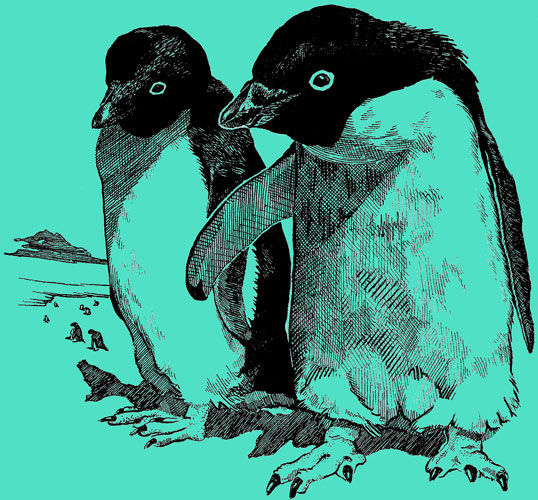
Adelies